

“How far does €2,000 a month go in Portugal’s top cities? From Lisbon’s buzz to Porto’s charm and Braga’s calm, discover how rent, bills, and groceries stack up—and which city gives you more for your money.”
Editor’s Note: This article was originally published in [September, 2022] and has been updated for freshness, accuracy, and comprehensiveness.
WHAT YOU’LL FIND IN THIS ARTICLE:
– Living Costs Breakdown – How much it costs to live in Lisbon, Porto, and Braga, including rent, transport, food, and leisure.
– Affordable Alternatives – Nearby areas that offer great quality of life at lower prices.
– Remote Work Hotspots – The best Portuguese cities and coworking spaces for tech professionals.
Coming to Europe can be a great opportunity, first because of the life conditions, such as safety for you and your family, and second because you’ll be receiving your salary in Euros.
If you’re considering Portugal as your destination in Europe, then the great dilemma is to choose which city to live in. With that in mind, we’ve decided to compare the costs of living in the Portuguese cities with the most professional opportunities: Lisbon, Porto, and Braga.
To define how much it costs to live in Portugal, we are taking into consideration the main expenses of living in each of these cities. We are also considering that the average salary of an IT technician in Portugal is €2000.
How much does it cost to live in Portugal? Common aspects of the 3 cities
Health system in Portugal
Portugal has a public health system (mostly free of charge) that allocates a family doctor to each person, providing access to appointments, examinations, and treatment.
In addition, some companies in Portugal offer health insurance to their employees, which means that health costs are reduced, for example, appointments using KWAN’s health plan cost around €15.
Fixed expenses
Fixed expenses vary very little from city to city, so in this article, we’re considering the same value for the three cities. They include common costs such as water, electricity, telephone, gas, and internet bills and, in Portugal, round up to €150, per month.
How much does it cost to live in Portugal? Comparison between 3 Portuguese cities
Check below the living costs for one person in Porto, Lisbon, and Braga for each of these expenses:
- Rent – here we consider a price range for a person living alone, from further to closer to the city center. If you manage to share the flat with one or two other people, the cost of living will be much more affordable; apart from the fixed expenses, the rent can also be about €200 cheaper.
- Fixed expenses – already mentioned in the previous point.
- Groceries – it includes home-cooked meals and economic takeaways.
- Transports – we consider the use of public transport.
- Leisure – here we consider going to the cinema, theater, dinners in restaurants, nightclub admissions, and drinks in bars.
Porto
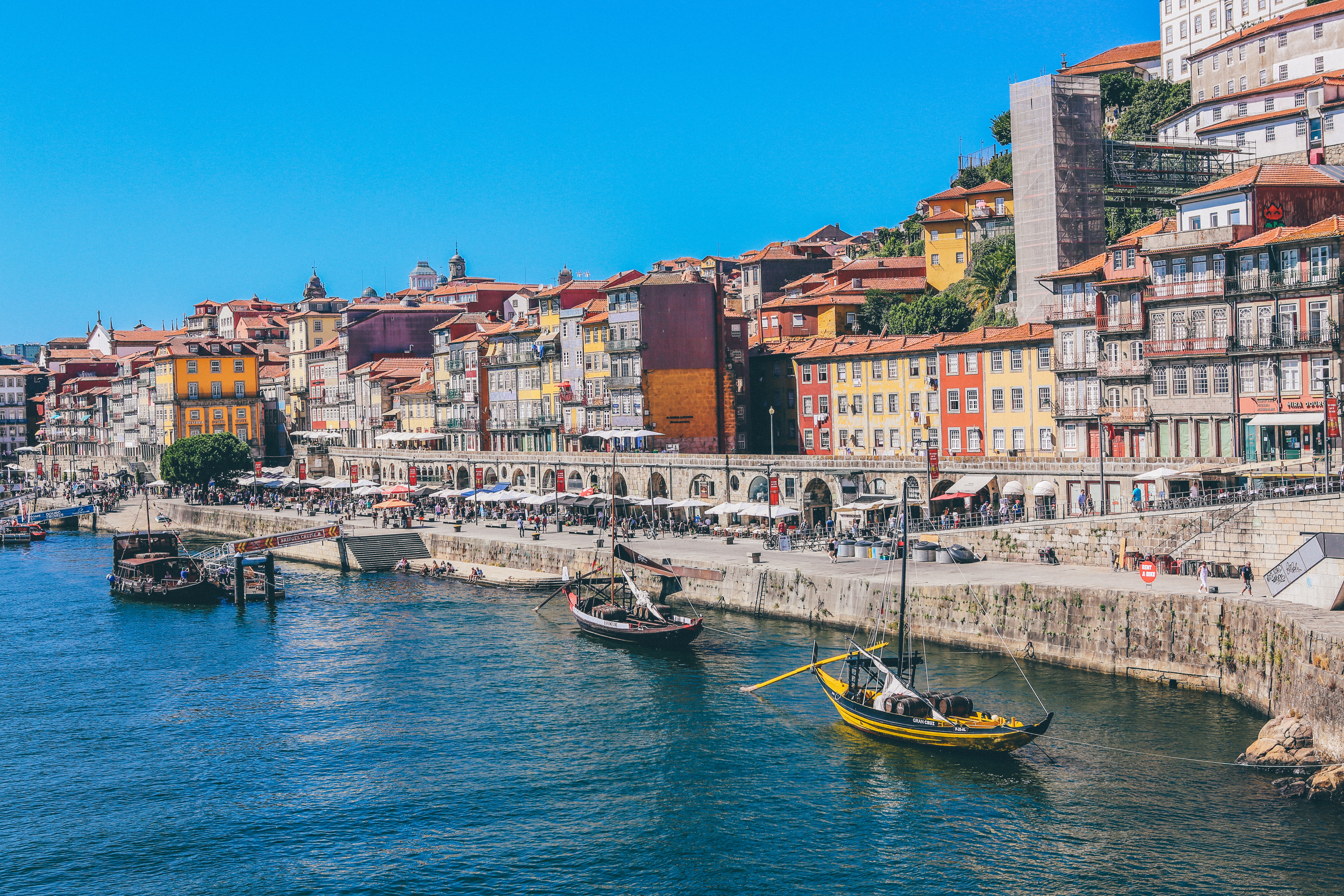
Besides being a coastal city, it’s home to the famous port wine. It is the second largest city in Portugal and it’s full of tourist attractions. However, as Porto’s cost of living can be a little expensive, there are some peripheral cities that are slightly cheaper, and that you may consider:
- Matosinhos – near the sea, with good beaches, good access to Porto – bus and metro (line A) that connects Matosinhos Sul (beach area) to Trindade – 30 to 40 minutes trip.
- Vila Nova de Gaia – train connection to the center of Porto (Devesas Station – São Bento Station), metro connection (from Santo Ovídio station to Porto’s central station (Trindade) – Line D) and buses.
- Valongo – a slightly more interior municipality, but with access by train – Valongo, Suzão, and Ermesinde station – about 20 to 25 minutes from the center of Porto – São Bento station.
- Gondomar – near Porto, with a metro connection that goes as far as Fânzeres station – Line F.
- Póvoa de Varzim – metro connection with the center of Porto (station with the same name), – line B trip takes about 50 minutes. Very close to Vila do Conde, both have good beaches and a great quality of life.
Porto has an airport and a good transport network, which connects the peripheral cities through buses, trains, and metro. The monthly pass costs between 30€ and 40€.
Cost of living in Porto and peripheral cities:
- Rental price: €1200
- Fixed expenses: €150
- Groceries: €350
- Transport: €40
- Leisure: €150
Cost of living in Porto and peripheral cities = €1440
Lisbon
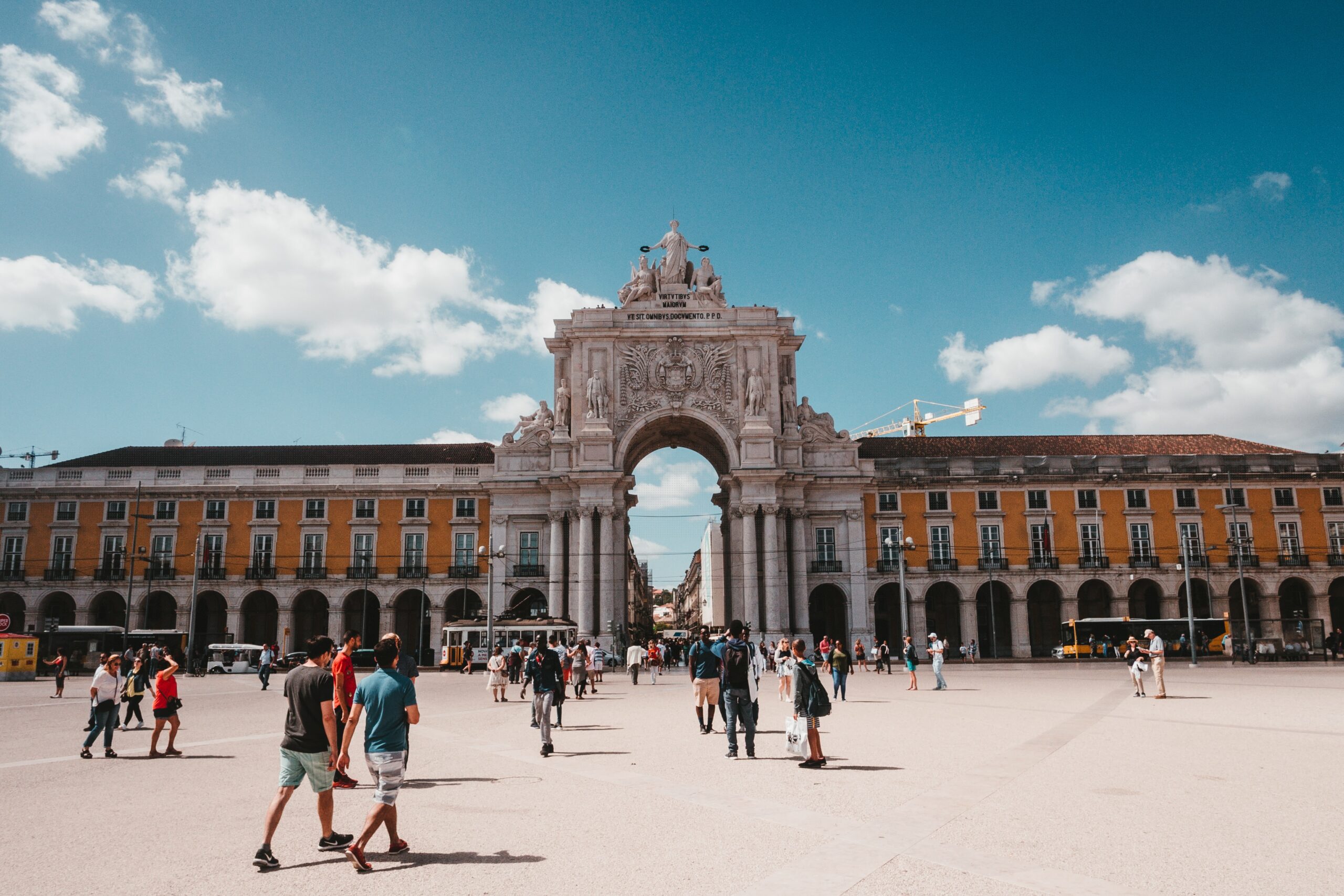
Portugal’s capital needs no introduction. In this port city, just like Porto, you’ll find the imposing São Jorge castle, as well as some of Portugal’s most traditional architecture. If you enjoy riding trams, then you’ll also love the city’s public transport system.
However, like Porto, Lisbon also has a high cost of living, so again you may want to consider the peripheral cities to save on rent:
- Amadora – covered by the metro network in some areas (stations: Alfornelos, Amadora Este, and Reboleira). You can reach the city center in about 30 – 40 minutes.
- Odivelas – covered by the metro network, has a station with the same name. You can reach the city center in about 30 – 40 minutes.
- Moscavide – covered by the metro network, with a station with the same name. You can reach the city center in about 30 – 40 minutes. Besides, Moscavide is located next to Parque das Nações, which was built for the 1998 World Expo and today is one of the most modern and pleasant neighborhoods of the city.
- Almada – it is on the other side of the river, very close to the beaches. It’s a very quiet area and it’s hard to believe that it’s only 40 minutes away from the center of Lisbon by train! Other cities on the south side of the Tagus river that you may also consider are Barreiro, Costa da Caparica, and Setúbal.
- Sintra – covered by the train network. Some cities in the municipality of Sintra that are worth considering are: Massamá, Cacém, and Mem Martins.
Most buildings in Lisbon don’t have a garage, so chances are you’ll rely on the city’s efficient public transport system—safe, clean, and costing between €30 and €40 per month. Conveniently, Lisbon’s airport is located within the city and is also easily accessible by public transport, making both local commuting and international travel straightforward.
If you’re really considering moving to the capital, knowing how to find a house in Lisbon—whether in the city itself or its surrounding areas—will help you settle in with ease.
Costs of living in Lisbon and peripheral cities:
- Rental price: €800 – €2000
- Fixed expenses: €150
- Food: €450
- Transport: €40
- Leisure: €250
Cost of living in Lisbon and peripheral cities = €2290
Braga

Located in the extreme north of Portugal, Braga is well known for having a strong religious and cultural heritage, such as the Bom Jesus do Monte Sanctuary. Braga is also a very lively city due to the university and its many students! Contrary to Lisbon and Porto, the cost of living in Braga is considerably lower.
Moreover, it has a great quality of life, as well as exciting job opportunities.
Braga also has a public transportation system with a monthly pass, which costs between 25€ and 30€. Braga doesn’t have its own airport, so if you live in Braga and need to catch a plane, you will have to travel to Porto (about an hour by bus) to use the airport.
Cost of living in Braga:
- Rental price: €550 – €950
- Fixed expenses: €150
- Food: €350
- Transport: €30
- Leisure: €100
Cost of living in Braga = €1380
Remote Work Hotspots: Where to Code and Save
Beyond cost considerations, one of Portugal’s strongest draws—especially for IT professionals—is its growing network of inspiring coworking spaces. Whether you’re budgeting or freelancing, knowing where to plug in your laptop can enhance productivity without compromising your wallet.
Modern cafés, flexible coworking hubs, and even scenic outdoor spots make it easy to change up your surroundings without losing focus. Add in the country’s mild climate, reliable internet in most urban areas, and laid-back lifestyle, and you’ve got the perfect mix for balancing work and leisure.
Factoring in the availability of good work environments alongside rent, transport, and food costs gives a fuller picture of life in Portugal. For remote workers, that combination of affordability and quality of life can make the country not just a place to live—but a place to thrive.
The Cost of Living in Portugal – Final Thoughts
KWAN has offices in two Portuguese cities, Lisbon and Porto, and also offers some remote positions for IT professionals who want to work elsewhere in the country.
Although Lisbon and Porto are more expensive cities, it is important to remember that they are also where culture, entertainment, as well as professional oportunities are more present.
In case you want to start your international career with us, KWAN can help you with the whole visa process so you can focus on what really matters: doing your job right!
Therefore, if you wish to have a more relaxed life, a more advantageous salary, and still live in a European country with a very international presence, KWAN is your source to get the so desired IT position in Portugal – talk to us and let us present you our best opportunities.