

According to a Brazilian who went through this process recently
Since I was young, I’ve always dreamed of living abroad — but that dream seemed far from my reality. Little did I know that software development would make it possible and that, with the help of KWAN, my life would completely change!
Today, I live in Portugal, and I can’t imagine living anywhere else. The safety, purchasing power, and quality of life here are things that once seemed unimaginable to me!
When I accepted the job offer to come here, I had many doubts and insecurities. That’s exactly why I want to share some of the lessons I learned along the way — to help you in your own relocation journey.
1. My experience
In December 2021, I arrived in Lisbon with my wife, and we went straight to a hotel. The first week was wonderful — new, exciting, and we immediately fell in love with the city. However, we didn’t expect the process of renting a house or apartment to take so long. Because of that, we ended up staying in the hotel longer than planned, not really knowing what to do next.
So here’s my first tip: if you don’t already have a place to stay, book an Airbnb for at least a month — that way, you won’t have to worry right away.
The cold weather was also a big challenge — we came from a city where it was around 35°C, and during our first week in Lisbon, the temperature dropped to 9°C! On top of that, the food was quite different, and at first, we were practically living on fast food.
That’s why it’s so important to have a place to stay (preferably one with a kitchen). Moving countries is already challenging for many reasons — time zone, climate, food, adaptation, and more. Being able to cook your own meals, maintain some of your routine, and take your time to find a permanent home makes all the difference.
Now that you know a bit about my journey, let me tell you about some of the differences between renting in Portugal and renting in Brazil.
2. Renting a house in Portugal
Let’s start with the terminologies, in Brazil we say “a one-bedroom, two-bedroom, or three-bedroom apartment”; in Portugal, apartments are categorized as:
T0 – studio (no bedroom)
T1 – one bedroom
T2 – two bedrooms
and so on.
It’s also quite common here to rent apartments that are fully furnished (mobilado/mobiliado — same meaning) or with a fully equipped kitchen (including stove, fridge, dishwasher, washing machine, etc.), which helps a lot.
Another important point: you need to be prepared. To rent a property in Portugal, landlords often require a Portuguese guarantor (fiador), a security deposit, and sometimes advance rent payments.
If you don’t have a Portuguese guarantor (as was my case), the landlord may ask for a higher deposit to compensate. The deposit is kept until the end of the contract, and usually equals 3 to 6 months’ rent, depending on the situation.
If you’re renting just a room, the process tends to be faster, but the same requirements can apply — making it equally bureaucratic (good luck!).
So, the key is to plan ahead and do your research to make a smart choice. And speaking of that, in the next section, I’ll share some tips on where and how to search.
3. Searching in the right place
For immigrants, going online is certainly a plus. With that in mind, here are some websites and Facebook groups to help you in your search:
- idealista.pt;
- imovirtual.com;
- uniplaces.com;
- Real estate websites, examples: ERA, REMAX, CENTURY 21;
- Facebook groups: Apartments & Rooms for Rent – Greater Lisbon; Apartments and rooms in Lisbon – flat sharing (tip: search on Facebook – Rent + Name of the city you want, there are always many groups on the subject that can help a lot).
It’s also important to use your networking (even if you only know a few local people!), the renting process usually goes faster when someone is referring you to the property.
This search process is usually quite laborious, so call the landlord/ real estate agent as soon as possible, schedule a visit and make your proposal. Apartments/houses in Portugal for rent come and go very quickly.
4. Finding the best deal
One way to get away from the high prices and rental conditions in Lisbon is to look for houses in the outskirts of Lisbon (Oeiras, Amadora, Odivelas, and Sintra) and in the southern margin of the Tagus river (Almada, Barreiro, Setúbal, and Montijo). Not only is the price lower, but there is also transportation connecting the cities all the time, making it easier to get around.
South Margin
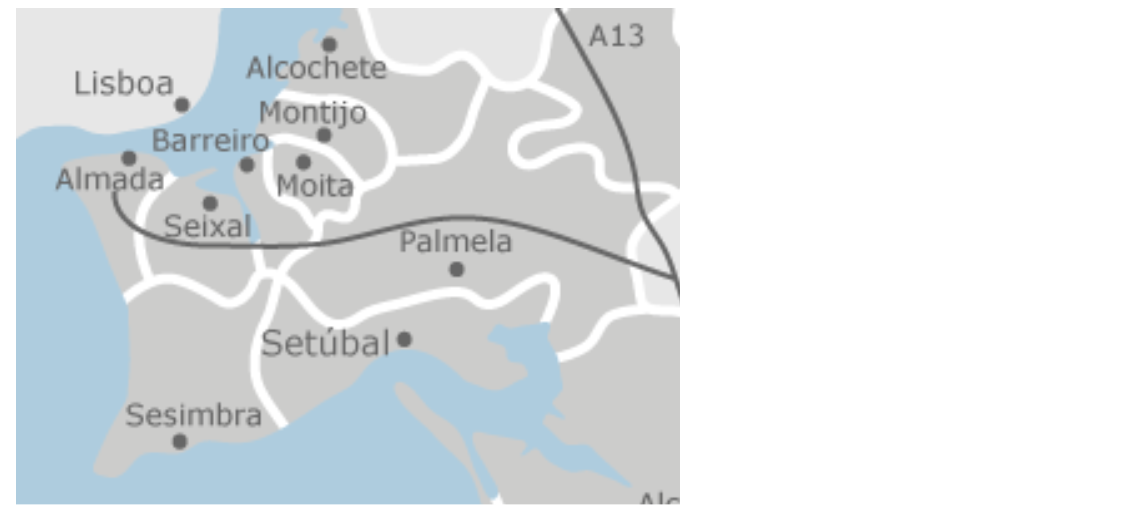
The south margin (pictured above) was my choice because it has some great deals, some co-workers were already living in this region, and the infrastructure is great (parks, shopping malls, hospitals, and markets).
It’s like living in a countryside, but next door to a big city.”
Besides, there is a train that connects Setúbal to Lisbon (passing through several districts on the way), and there are boats that connect Barreiro, Seixal, and Montijo to the capital.
Nevertheless, consider that if you don’t live near public transport (and don’t own a car), you may have difficulties getting to Lisbon.
City of Lisbon
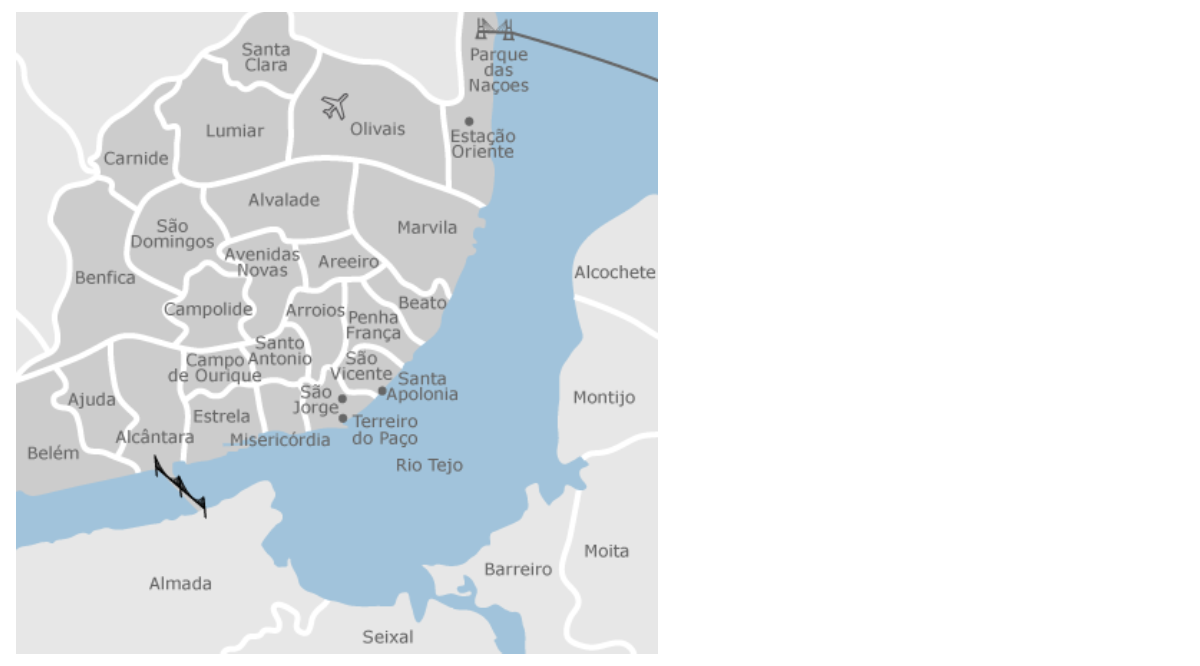
The perks of living in Greater Lisbon are the diversity you find (bars, restaurants, shopping malls, transportation, landmarks, and everything this city has to offer). However, rentals have a higher price per square meter; for example, the rent you would pay for a studio apartment in Lisbon is equivalent to a 1 or 2-bedroom apartment in the neighboring areas.
It is perfect for people who need to work daily in Lisbon and want to easily get around, since the city’s infrastructure is excellent and allows quick access from point to point.
Lisbon Outskirts
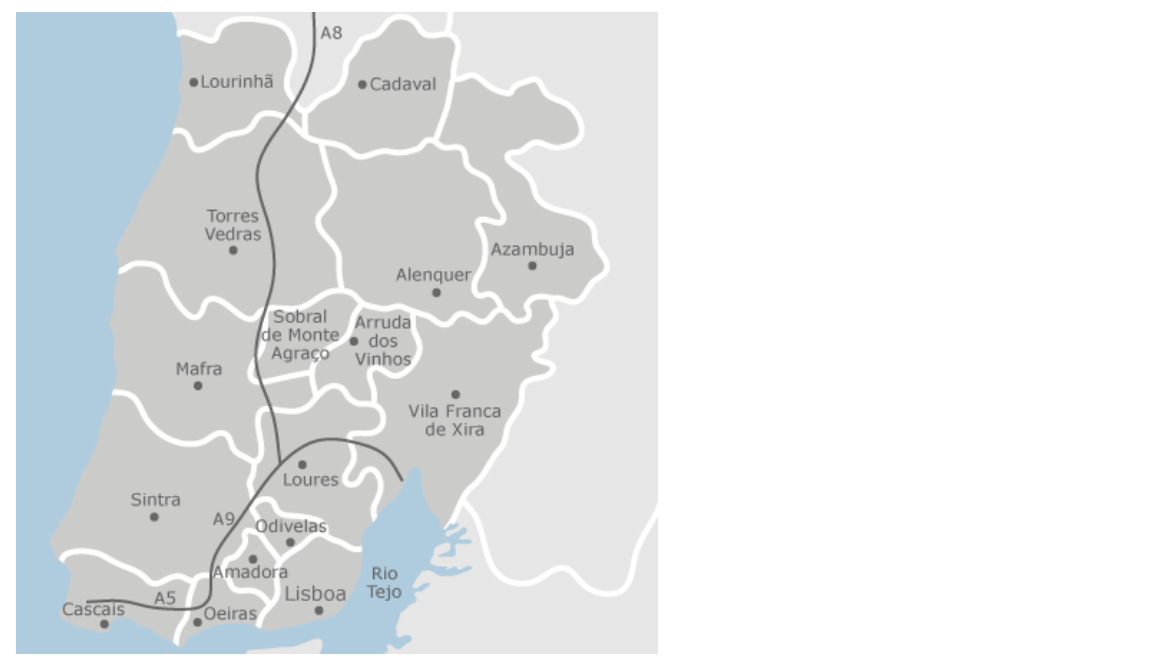
Another option is to look for places to stay in Oeiras, Amadora, Odivelas, and Sintra, for example. These areas are directly connected to Lisbon, which means that you will live in the capital but away from the large flows, and have some faster means of transport than from the southern margin (boat vs subway).
Amadora has a good infrastructure of shopping centers and public transportation (bus, train, and subway). Besides, it is 14 km away from the center of Lisbon.
Oeiras is one of the most developed and modern municipalities on the outskirts of Lisbon and has beautiful beaches. In addition, it borders the city of Lisbon and has trains and buses as the main means of transportation to the city center.
Sintra is a beautiful town with a vast architectural heritage! Rental values in the municipality are very diverse, with expensive, medium, and cheap options. Not to mention that the train allows you to arrive in Lisbon in approximately 30 minutes, passing through several points in the city.
Odivelas is a small municipality and is the closest one to Lisbon. In addition, it has buses and a subway. It is a place with a lot of cultural diversity and where you can find good rental opportunities, besides a lot of commerce nearby.
How to Find a House in Lisbon: Final Remarks
Summing up: the rental prices on the south margin are better per square meter, Lisbon has more accessibility and price diversity, and the outskirts are the middle ground (they have some good deals and several transportation options). So, it depends a lot on your goals, your needs, and the amount of money you are willing to pay.
Before making a decision, it is worth analyzing whether you work remotely or need to commute to the office regularly. Regardless of whether you choose the south margin, Lisbon, or the outskirts of Lisbon, you should keep in mind that the cities in Portugal are very organized, safe, and have excellent infrastructure for you and your family.
So wherever you choose to live, you will certainly feel safe and happy with your decision to live in Portugal – even if, as in my case, the beginning is a bit bureaucratic.
Besides, KWAN played a fundamental role during the whole process of moving and adapting. Today I am very happy about living in Portugal. The beginning is always the hardest part, but everything gets easier as time goes by. I wish you luck in your journey and hope these tips have been helpful.